The store will not work correctly when cookies are disabled.
We use cookies to make your experience better.To comply with the new e-Privacy directive, we need to ask for your consent to set the cookies. Learn more.
Why do tennis players grunt? Read more about whether this controversial practice is necessary for success on the court & what the rules say about it.
The sound of grunting has become an inextricable part of professional tennis matches – but is grunting truly necessary, or is it merely a habit or a distraction?
At the heart of this discussion lies the question of whether grunting enhances performance or serves a strategic purpose, or if it's simply a byproduct of the sport's physical demands.
Supporters argue that grunting can help players coordinate their movements and maintain rhythm, while critics contend that excessive grunting can be disruptive to opponents and spectators alike.
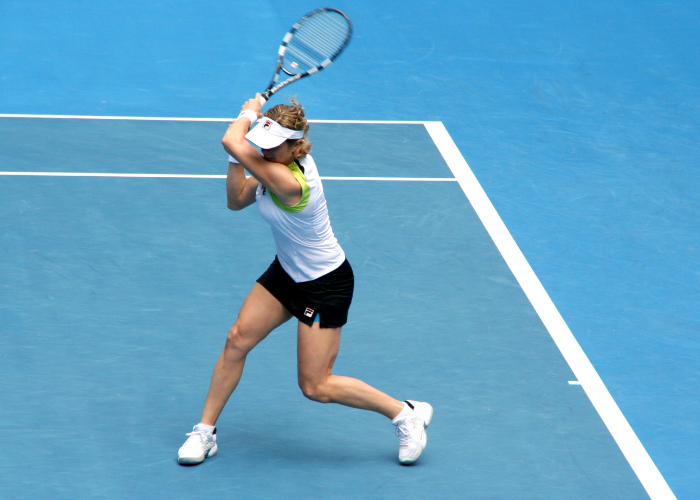
Image: by Jim De Ramos (from Pexels) via Canva.com
3 Main Reasons Why Tennis Players Grunt
There are several potential reasons why tennis players grunt during matches, each offering a different perspective on the necessity and purpose of this behaviour.
#1 Physical Exertion
Tennis is a physically demanding sport that requires players to generate explosive power and rapid movements.
Grunting may be a natural response to the physical exertion involved in hitting the ball with maximum force.
The act of exhaling forcefully during a stroke could help players transfer energy more efficiently, much like weightlifters who grunt during heavy lifts.
#2 Psychological Aspects
For some players, grunting may serve as a release of tension or a way to maintain focus and rhythm during intense rallies.
The audible exhalation can be a form of self-expression or a means of channelling emotions and adrenaline in a high-pressure environment. Additionally, grunting could help players develop a consistent timing pattern for their strokes.
#3 Intimidation & Strategic Use
While controversial, some players and coaches believe that grunting can be used as a tactical tool to disrupt or intimidate opponents.
The loud grunts, especially during serves or groundstrokes, may startle or distract opponents, potentially throwing off their concentration or timing.
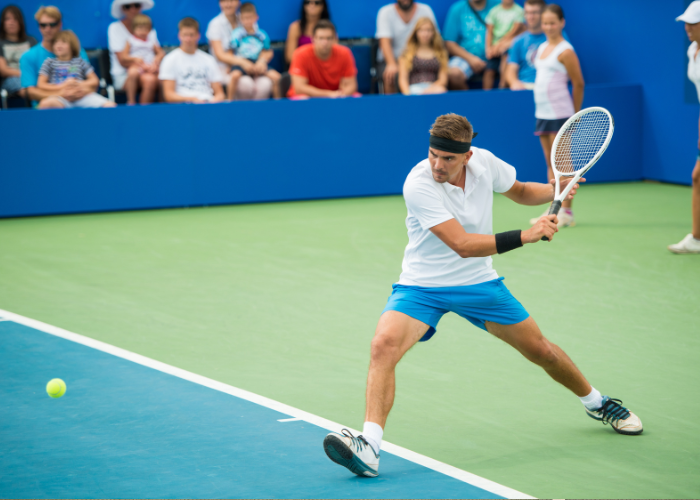
Image: by IvanMikhaylov (from Getty Images) via Canva.com
The Debate Around Grunting in Tennis
Despite the varying opinions and research findings, the debate around grunting in tennis remains polarised, with supporters and critics presenting compelling arguments on both sides.
Support for Grunting
Criticisms of Grunting
Many players, coaches and fans argue that grunting is a natural and necessary part of the game, akin to the sounds made in other sports that require explosive movements.
Critics argue that excessive grunting is a form of gamesmanship designed to distract or intimidate opponents, which goes against the spirit of fair play.
Proponents claim that grunting can enhance performance by helping players coordinate their movements, maintain rhythm, and release tension during high-intensity rallies.
Some spectators and tennis purists find loud grunting to be disruptive and detrimental to the viewing experience, especially in enclosed tennis stadium environments.
Personal testimonies from players like Serena Williams and Rafael Nadal, who are known for their grunting, suggest that it is an integral part of their game and helps them play at their best.
Tennis officials and governing bodies have received complaints about excessive grunting, with some suggesting that it should be penalised as a hindrance or unsportsmanlike conduct.
The contrasting viewpoints highlight the complexity of the issue, with arguments revolving around performance enhancement, sportsmanship, and the overall experience of the game for players and fans alike.
Image: by simonkr (from Getty Images Signature) via Canva.com
The Impact of Grunting During Tennis
Grunting in tennis has sparked diverse reactions and raised questions about its impact on the sport.
For fans, loud grunting can be a distraction that ruins the atmosphere. However, some view it as adding intensity and drama to matches. Broadcasters worry about grunting disrupting the television viewing experience.
Players who grunt may gain a psychological edge over opponents by unsettling their concentration, yet excessive grunting could also be perceived as a lack of composure. Those who don't grunt risk being seen as lacking intensity.
Umpires can penalise excessive grunting deemed unsportsmanlike, but subjectivity makes enforcement inconsistent.
Some tournaments set decibel limits, while others leave it to the officials' discretion. The debate centres on balancing fair play, individual expression, and the game's integrity.
As grunting remains prevalent, governing bodies face ongoing challenges in satisfying players, fans and officials on acceptable levels of noise during matches.
Image: by Aksonov (from Getty Images Signature) via Canva.com
Could Grunting in Tennis Be Banned?
While grunting has been a part of the sport for decades, some observers have noted that younger players seem to be grunting more frequently and at higher volumes compared to previous generations.
This trend could be attributed to a combination of factors, including increased emphasis on power and athleticism, as well as the influence of high-profile grunters who have become role models for aspiring players.
In response to the growing concerns over excessive grunting, tennis governing bodies have taken steps to address the issue.
The International Tennis Federation (ITF) has provided guidelines for officials to monitor and penalise players for excessive grunting, although the enforcement remains subjective.
As the sport continues to evolve, it's likely that grunting will remain a part of tennis, at least to some degree.
However, the extent and acceptability of grunting may be shaped by ongoing discussions within the tennis community, as well as the potential impact on fan experiences and the overall integrity of the game.
There may be increased pressure on governing bodies to establish clearer and more consistent guidelines or rules regarding acceptable noise levels during matches.
Image: by isitsharp (from Getty Images Signature) via Canva.com
The Takeaway
The debate around grunting in tennis has been a long-standing and polarising issue within the sport.
Grunting has its roots in the physical exertion and psychological intensity of tennis, with players using it as a means to release tension, maintain rhythm, and potentially gain a strategic advantage over opponents.
However, excessive grunting has also drawn criticism from fans, officials, and tennis purists who find it disruptive, unsportsmanlike, and detrimental to the viewing experience.
The subjective nature of what constitutes "excessive" has made enforcement challenging, leading to inconsistencies in how tournaments and officials handle the issue.
What we know for sure is that the now-common grunts we hear during a tennis match are the sign of a dedicated and passionate player.
Some players naturally grunt louder due to their playing style, technique, and physical exertion levels.
Additionally, certain players may consciously or subconsciously use louder grunting as a way to release tension, maintain rhythm, or try to gain a psychological edge over opponents.
Can Excessive Grunting Be Penalised in Professional Tennis?
Yes, umpires have the authority to issue warnings or penalties if a player's grunting is deemed excessive or a hindrance to their opponent.
However, determining what qualifies as "excessive" is subjective, leading to inconsistent enforcement across tournaments and matches.
Do Professional Players Practice or Train For Grunting?
While most players don't explicitly train to grunt, the act often develops naturally due to the physical demands of tennis.
Some coaches may provide guidance on breath control and timing exhalations with strokes, which can influence a player's grunting patterns.
Has Grunting Become More Prevalent Among Younger Players?
Many observers believe that younger professional players tend to grunt more frequently and at higher volumes compared to previous generations. This trend could be influenced by increased power in modern tennis, as well as the example set by high-profile grunters.














 RSS Feed